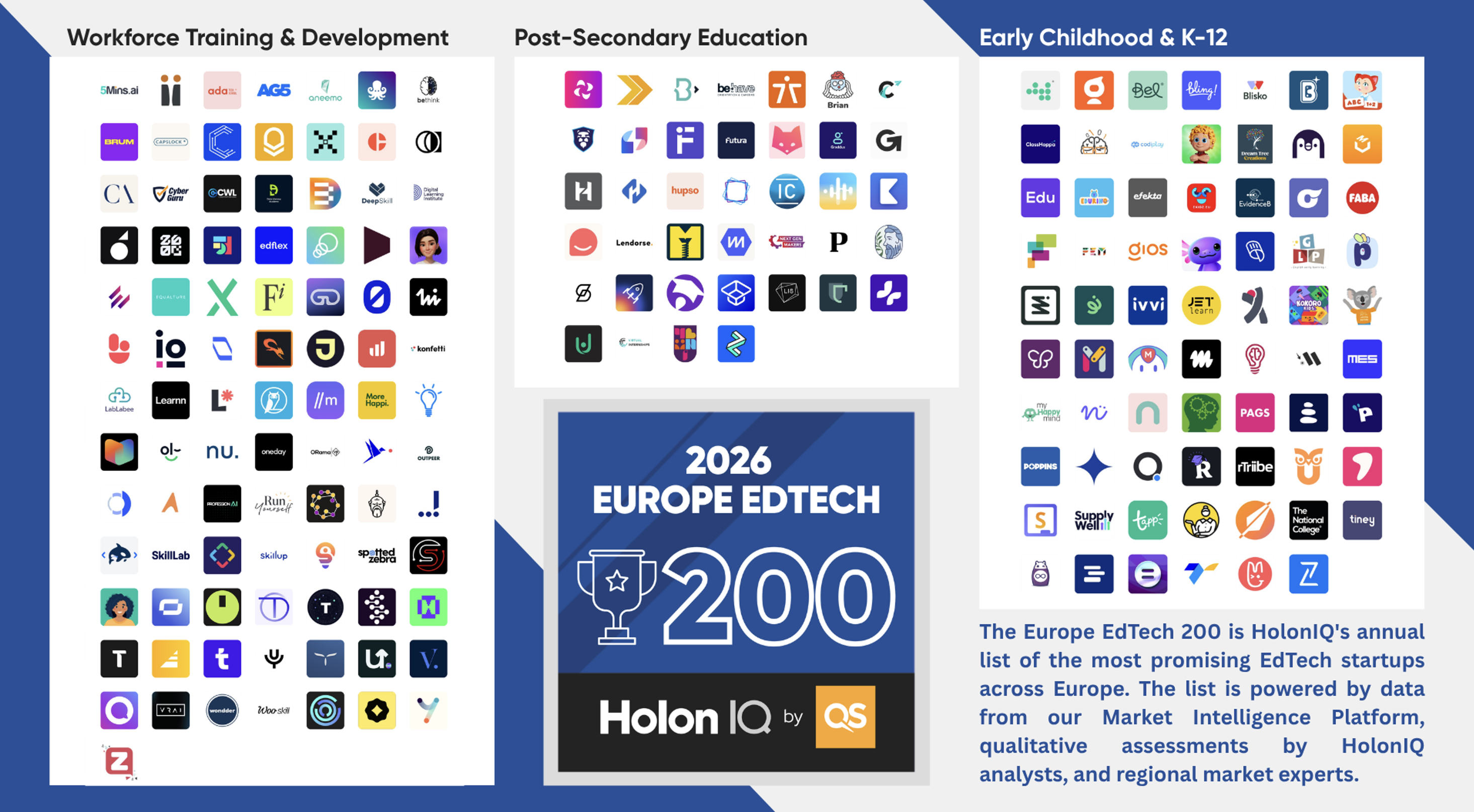
The Global Education Outlook is HolonIQ's annual analysis on the future of education. The 2026 edition delivers 160+ pages of market data, investment analysis, and strategic insight on how education systems are responding to AI adoption, skills alignment, demographic pressure, and tighter capital conditions.
Education enters 2026 with clearer priorities. Education systems will certainly continue with AI experimentation but also move toward governed deployment, with institutions focused on practical gains in workflow efficiency, instructional quality, and learner support. Skills (durable, foundational, and career-aligned) are now a procurement and policy filter across K–12, post-secondary, and workforce education. Expect capital to remain selective, favoring platforms that demonstrate measurable outcomes and value where possible, data and infrastructure advantage, and credible links between education and work. Governments will continue to prioritize vocational pathways, digital transformation and infrastructure gains, and early-career pipelines, while international education faces uneven movement shaped by visas, affordability, and geopolitics.
2026 Global Education Outlook
180 pages of data, insights and analysis on the new education economy
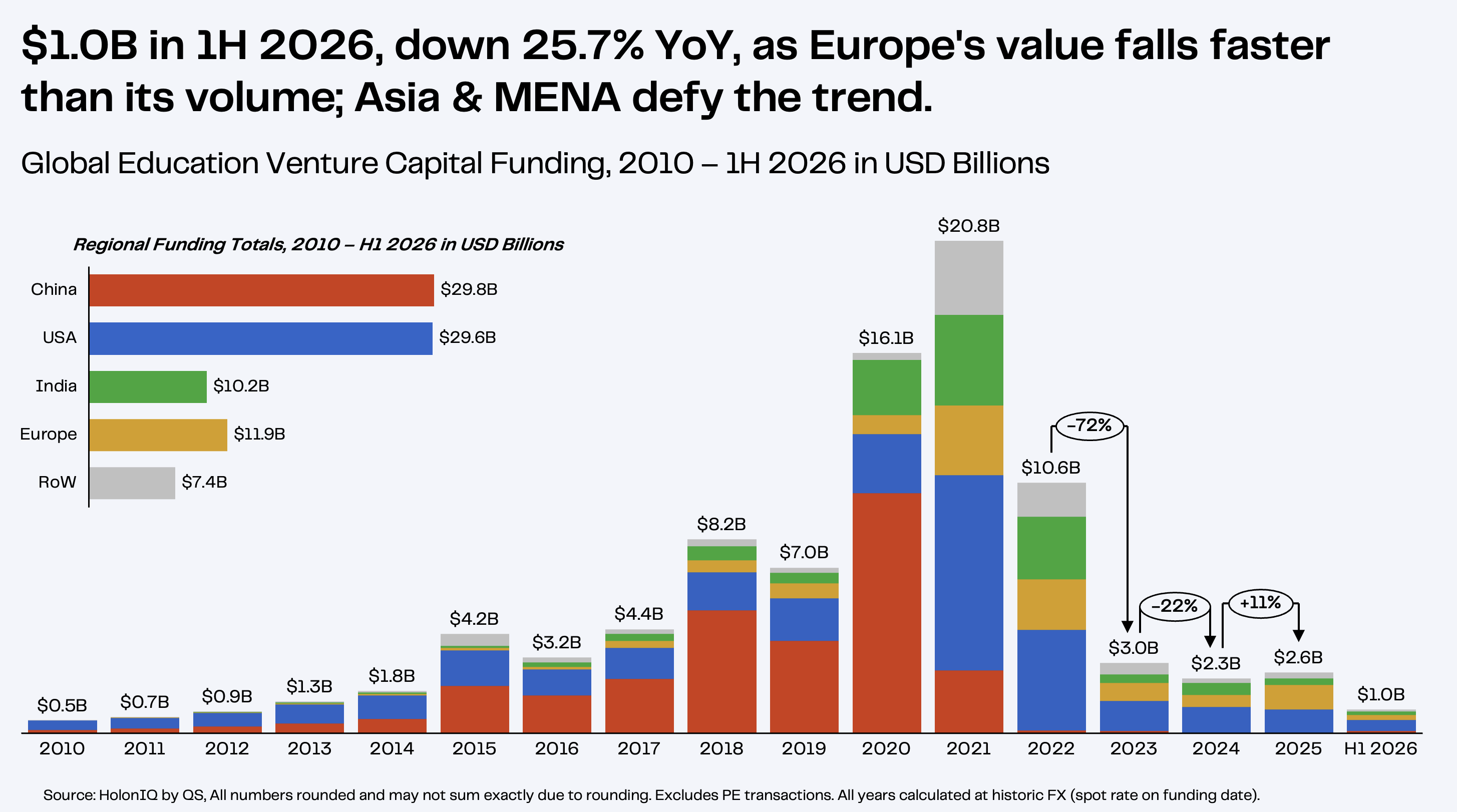
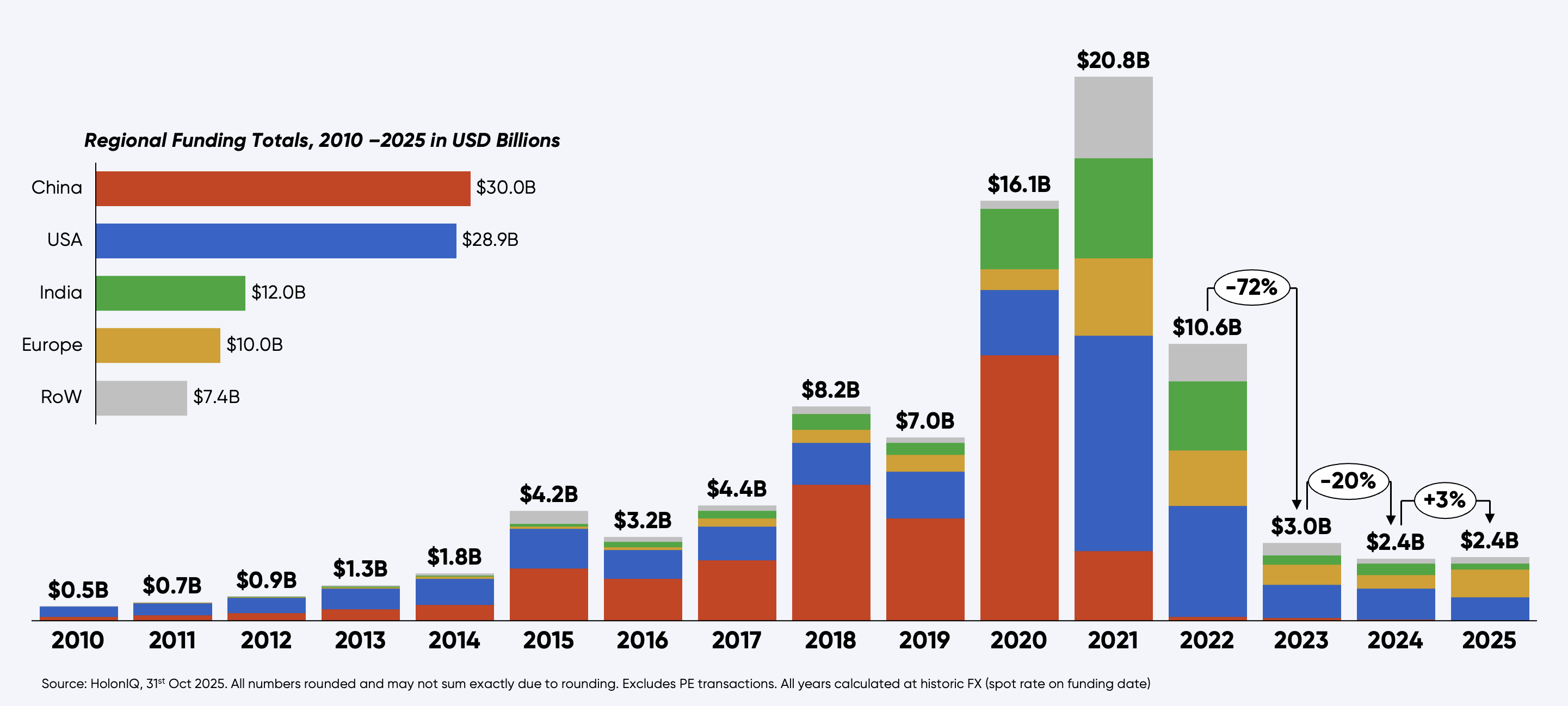
2025 marked a steadier, more disciplined investment environment for global education. Venture capital reached $2.4B, driven by small- to mid-sized deals and investor preference for AI-enabled, workflow-embedded, and workforce-aligned models. Growth-at-all-costs is no longer the industry motto; scrutiny on fundamentals, sustainability, and proof of value now adds depth to the market.
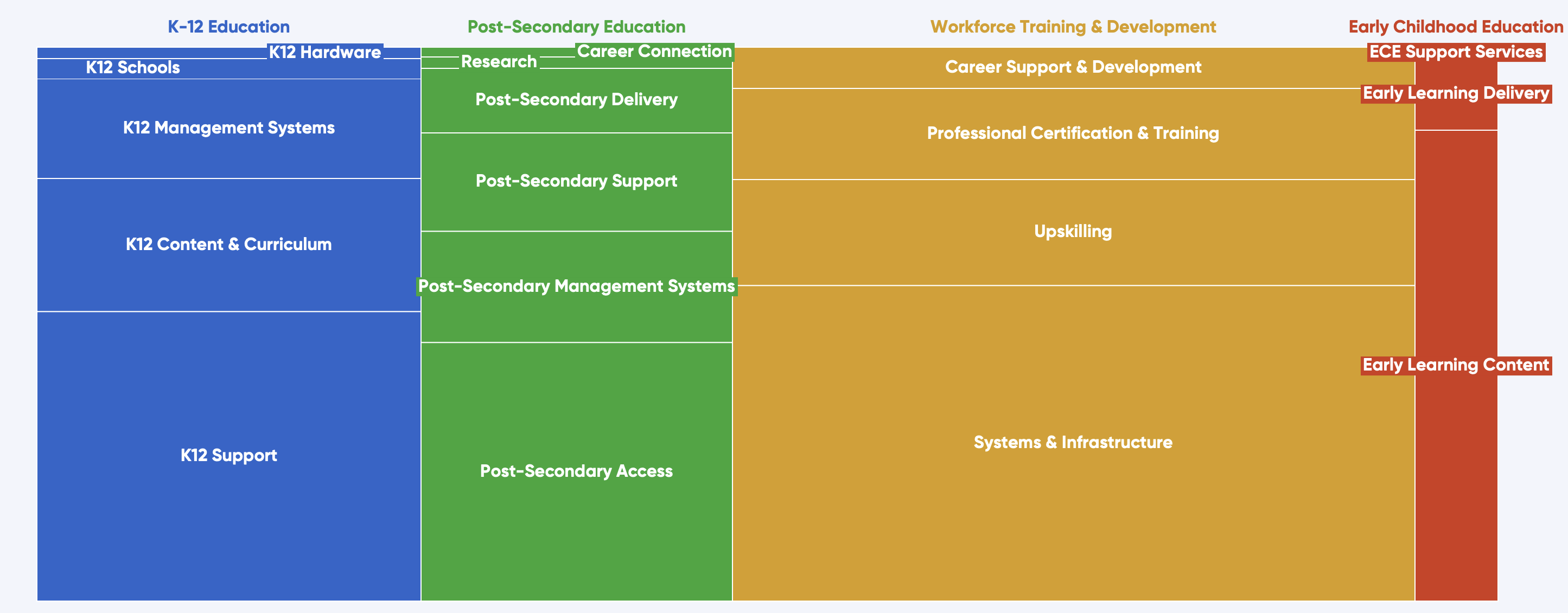
Figure 1. Global EdTech Venture Capital Funding by Sector & Sub-Sector, 2025
M&A activity remained resilient, with ~360 transactions, concentrated around systems, infrastructure, and job-aligned upskilling, particularly in North America and Europe. Workforce training continued to attract the most activity, while K–12 and post-secondary investment focused on digital curriculum, student success, and AI-supported learning. Eight education IPOs came to market in 2025, reflecting renewed but conservative appetite, with valuation discipline and AI readiness under close examination. Europe emerged as the leading investment region, capturing close to half of all global VC value outpacing North America, while EdTech’s unicorn count held steady amid tighter pricing.
Figure 2. Global Education Venture Capital Funding, 2010 –2025 in USD Billions
2026 Global Education Outlook
180 pages of data, insights and analysis on the new education economy
HolonIQ Intelligence tracks 20 strategic shifts and 50+ trends across early childhood, K–12, post-secondary, and workforce education. Four themes stand out.
AI with accountability. Adoption accelerated where roles are defined, governance is strengthening, and integration reduces friction. Course design, assessment support, student services, and workforce training are emerging as durable use cases. High-profile partnerships and cloud-scale deployments highlight the importance of quality data and oversight. In 2026, institutions will invest in AI that is ethical, transparent, and instructionally credible.
Engagement as a performance signal. Learner engagement has re-emerged as a proxy for system effectiveness. Secondary and post-secondary systems are emphasizing career-connected learning, structured pathways, and attention management, while workforce education is scaling immersive, non-invasive, highly engaging models. Expect persistence metrics to increasingly influence funding, procurement, and platform design.
Skills as system architecture. Skills transparency and alignment is affecting policy and pedagogical decisions across the teaching and learning continuum. Governments are expanding vocational and early-career pathways, employers are scaling in-work training, and institutions are investing in skills intelligence and career navigation solutions. As frameworks for skills mature, demand will shift toward initiatives that make outcomes and skills visible and pathways navigable.
Infrastructure underpins all of this. Progress remains incremental, but momentum is building toward interoperable platforms, shared data standards, and connected ecosystems. Partnerships are enabling this transformation in new ways. In 2026, expect more conversations about core systems that work together.
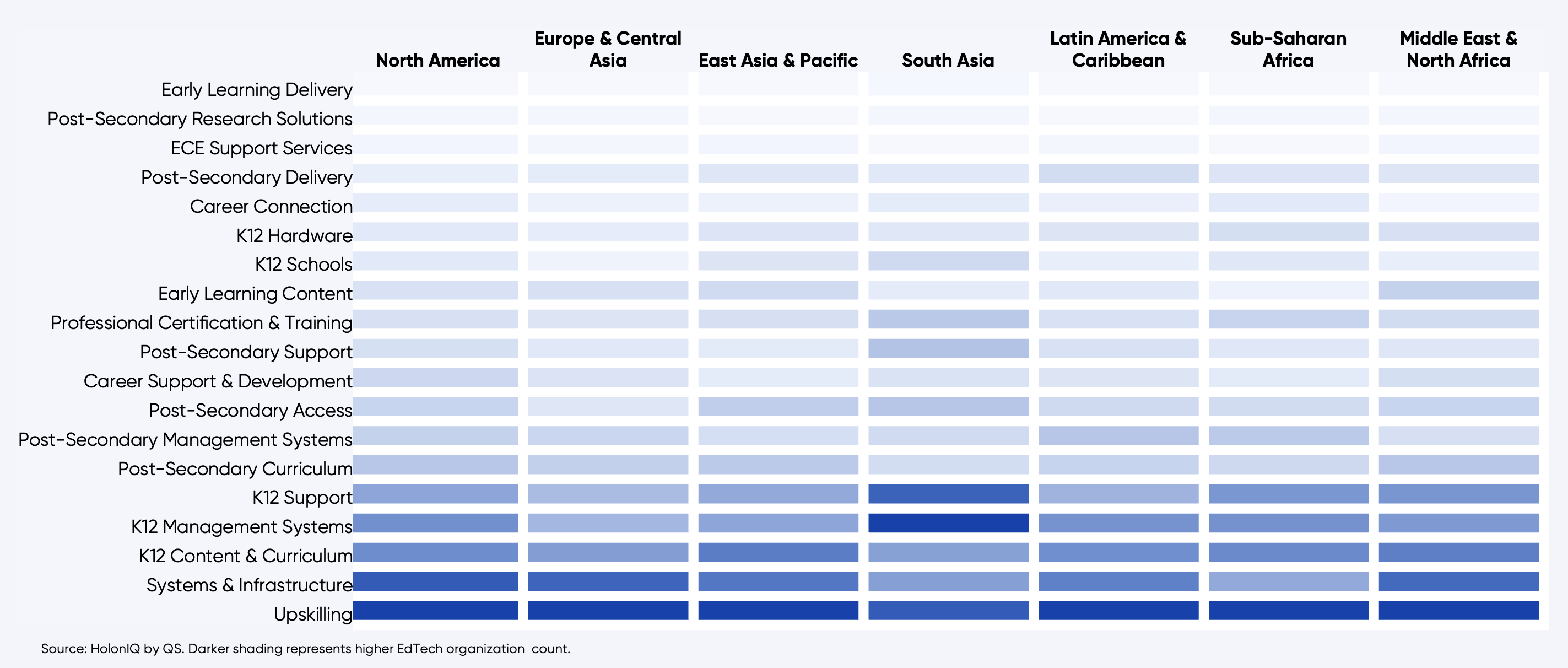
Figure 3. Newly formed EdTech Companies 2011-2025, Distribution by Region & Sub-Sector
Regional Outlook
Regional education strategies in 2026 are being shaped by demographics, fiscal pressure, and labor-market urgency. Governments are making sharper trade-offs between access, quality, and workforce alignment.
Aging populations in East Asia are tightening domestic pipelines, accelerating international recruitment, AI-enabled productivity, and deeper integration between education, research, and advanced industry. Europe remains policy-driven and fragmented, with slower labor growth pushing vocational expansion, short-cycle credentials, and workforce mobility. North America pairs technological leadership with structural uncertainty, as demographic decline, affordability pressure, and volatile visa policy reshape enrollment strategies. Latin America is prioritizing cost-effective digital delivery, foundational skills recovery, and public–private models under fiscal constraint. MENA and South & Southeast Asia are investing at scale in vocational education and skills pipelines to support young populations and economic diversification.
Across regions, 2026 will reward systems that align investment tightly with labor-market outcomes, maintain fiscal discipline, and deploy technology in service of measurable skills and participation gains. Policy coherence, enabled by cooperative innovation infrastructure, is becoming the decisive differentiator.
No items found.
Latest Insights
Global Insights from HolonIQ’s Intelligence Unit. Powered by our Global Impact Intelligence Platform.
We provide you with relevant and up-to-date insights on the global impact economy. Choose out of our newsletters and you will find trending topics in your inbox.




.png)