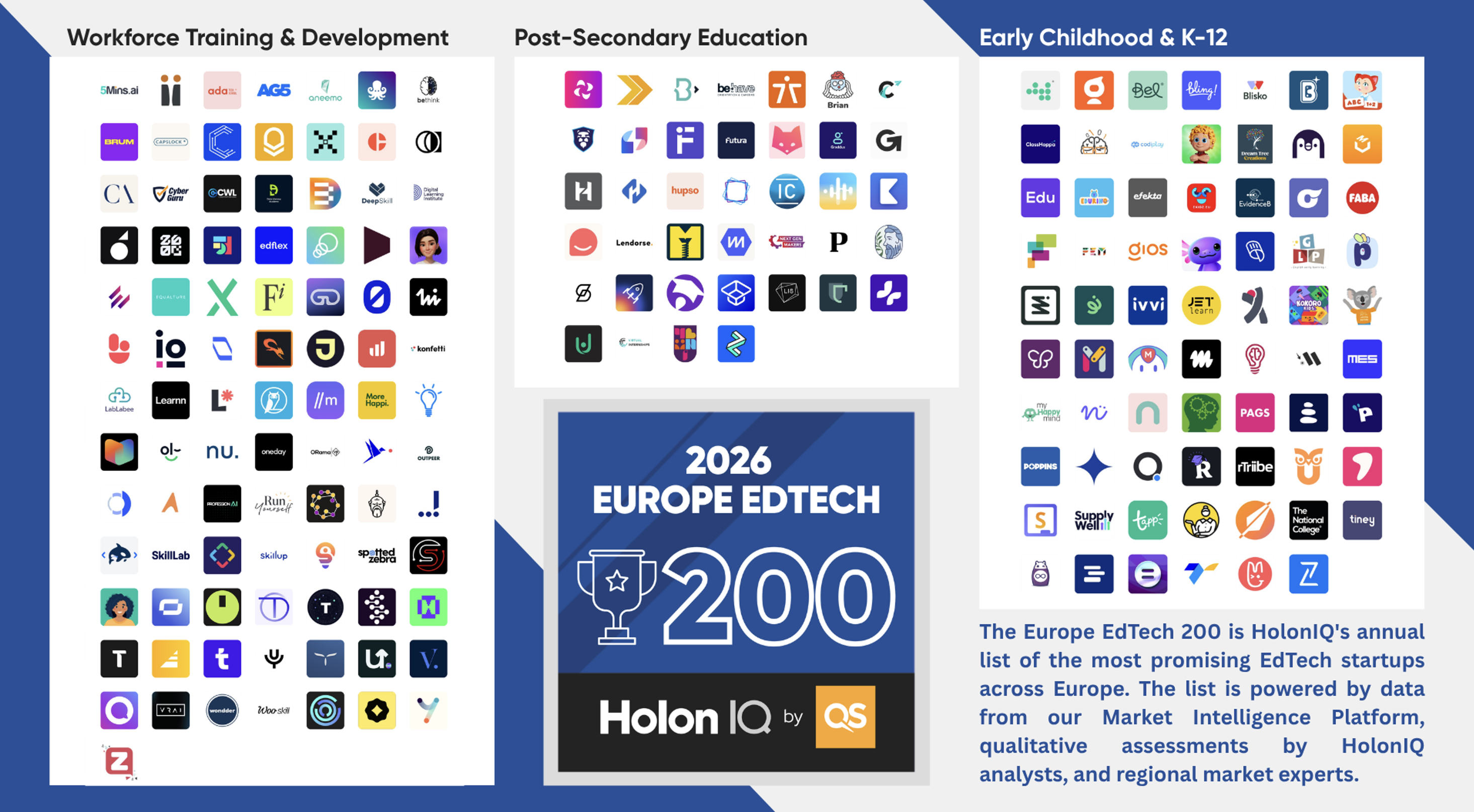
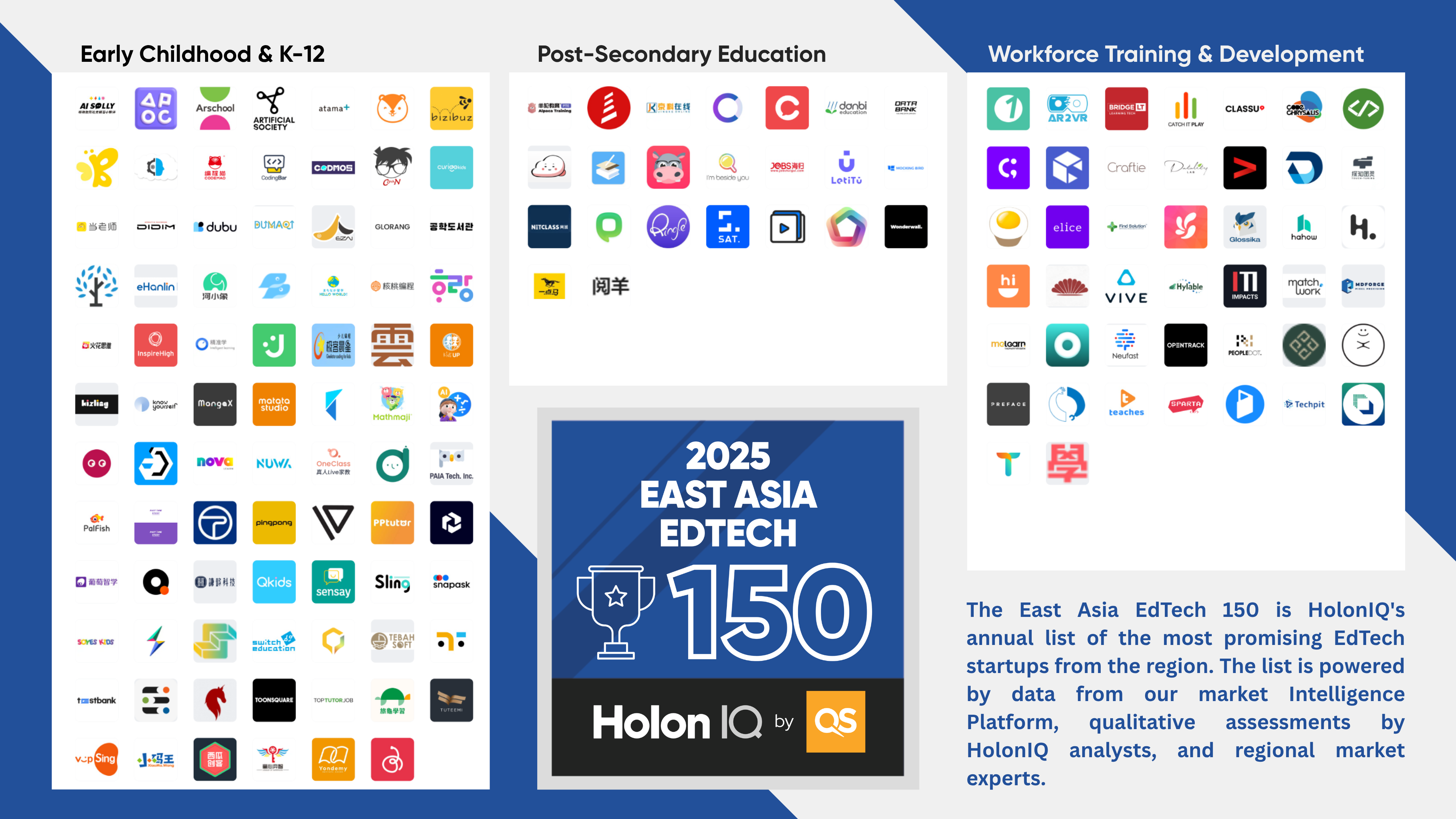
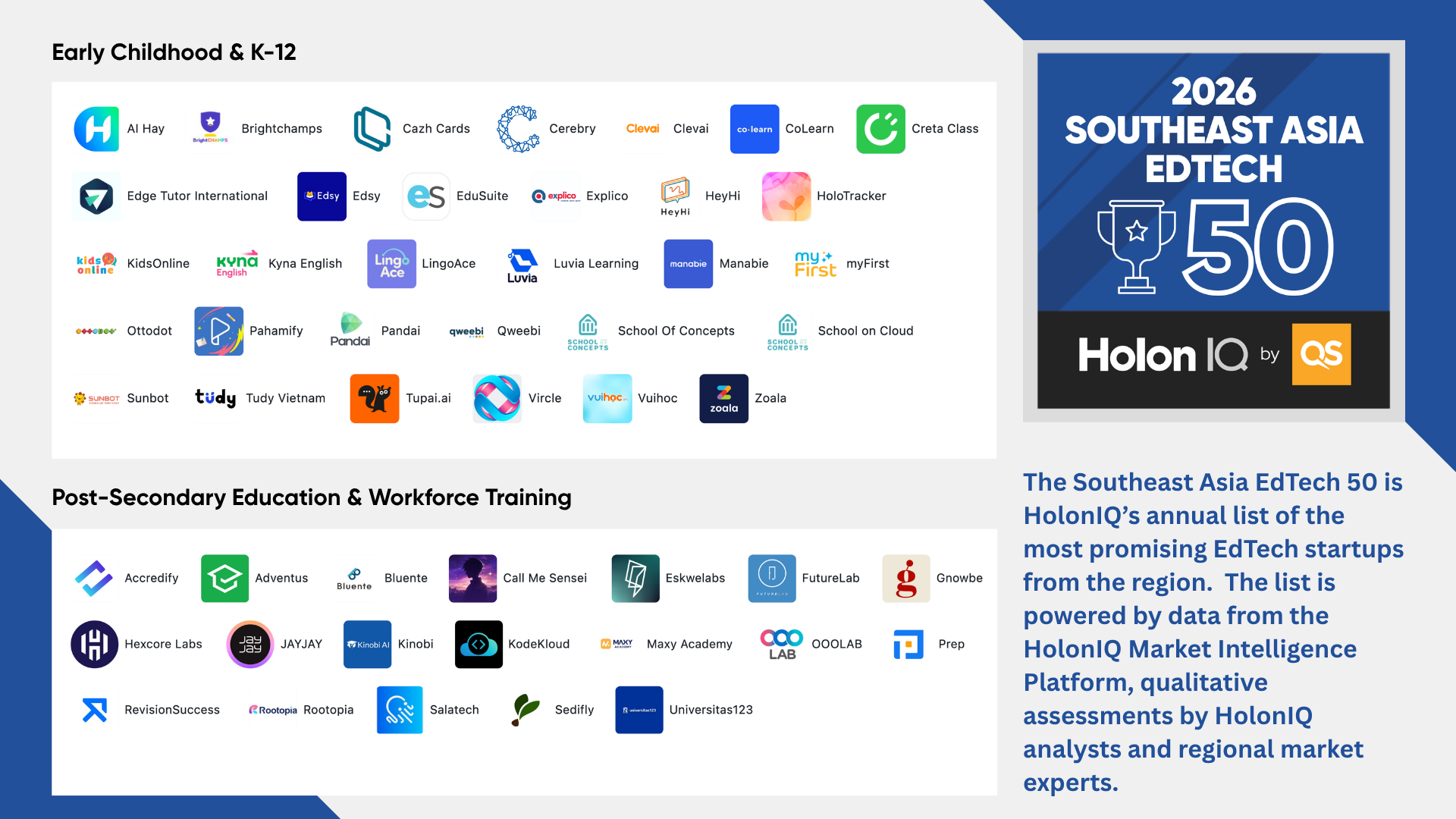
The East Asia EdTech 150 is HolonIQ's annual list of the most promising EdTech startups from the region.
The East Asia EdTech 150 is focused on identifying young, fast growing and innovative learning, teaching and up-skilling startups from greater China, South Korea and Japan. Powered by data and insights from our Impact Intelligence Platform together with qualitative assessments by HolonIQ’s Intelligence Unit, and local market experts, organizations are evaluated and scored based on our eligibility and assessment criteria, which excludes EdTech's founded over 10 years ago, or those which have exited (listed, acquired or controlled by another organisation).
The East Asia EdTech 150 is aligned to the Global Learning Landscape, an Open-Source Taxonomy that maps the education and talent market
Exhibit 2
K–12 remains East Asia’s largest EdTech segment, as workforce and infrastructure gain depth.
K–12 solutions make up just over half of the 2025 East Asia cohort, underscoring continued investment in school-age learning and digital classroom tools. Within this segment, content platforms still lead, but support and management systems are expanding as schools prioritize scalable infrastructure. Companies such as Huohua Siwei (China) and Atama Plus (Japan) reflect this shift toward system and learner support.
Workforce learning accounts for around one-fifth (20%) of the cohort, led by upskilling and professional certification ventures such as Elice (Korea) and Peopledot (Japan). Post-secondary startups remain steady, with Classum (Korea) representing the region’s growing adoption of campus management and collaboration systems. A smaller but notable group of infrastructure players, including Find Solution AI (Hong Kong), is building the data and platform layers that underpin multiple education segments. The 2025 cohort overall shows a mature, diversified market, still anchored in K–12 but increasingly defined by system-level and workforce solutions.
Exhibit 3
Ready to get started?
Get a personalized walkthrough of HolonIQ's Global Intelligence Platform.
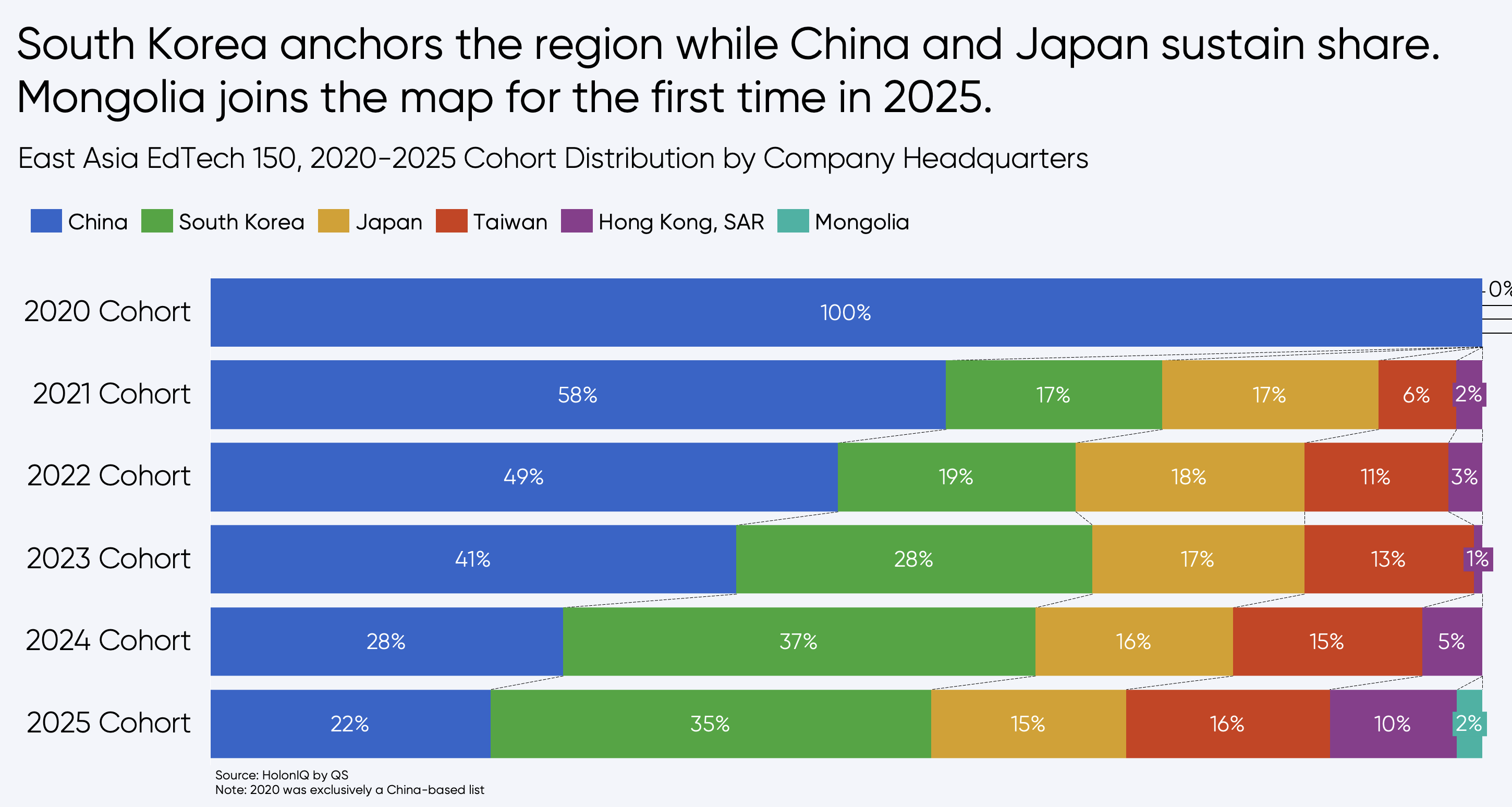
Korea maintains leadership as China steadies and Japan expands.
South Korea accounts for over a third of the 2025 East Asia cohort, followed by China for another third and Japan capturing about a quarter. Korea’s strong digital infrastructure and policy support continue to anchor regional innovation. China’s share has stabilized as new ventures concentrate on compliant, enterprise-focused models. Japan continues to expand its role through language, STEM, and workforce learning startups.New activity from Mongolia signals a broader geographic footprint. Notable examples from the cohort, such as Mathpresso (Korea), illustrate sustained K–12 innovation, while Monoxer (Japan) highlights the region’s commitment to personalized and lifelong learning. The distribution underscores a more balanced innovation network across an evolving region.
Exhibit 4
Direct-to-Consumer EdTech models lead the East Asia EdTech landscape with B2B maintaining share.
Direct-to-consumer and hybrid models account for nearly three-quarters of the 2025 cohort, reflecting a regional appetite for personalized learning and self-directed study. Institutional approaches make up the remaining share as schools, universities, and enterprises expand digital procurement.
Consumer-facing platforms such as Palfish (China) and Mathpresso (Korea) continue to dominate learner adoption, while HelloWorld (Japan) represents institutional collaboration through school partnerships. Workforce ventures like Elice (Korea) bridge the two, offering direct learner access while supporting enterprise certification and placement.
Exhibit 5
The 2025 Cohort rewards a maturing market that reflects a slower early-stage ecosystem.
The 2025 East Asia cohort is heavily weighted toward established ventures, with around 95% operating for more than four years. This age profile indicates consolidation and operational maturity, though also fewer new entrants compared with earlier years. Overall, the data suggests a market emphasizing sustainable growth and cross-border expansion over rapid startup creation.
Exhibit 6
Track the 2025 Cohort
HolonIQ customers can track the data for the most promising EdTech startups in the region on the HolonIQ Intelligence Platform. Look for the 2025 East Asia EdTech 150 list and double click into the data behind the charts. Request a Demo if you are not a customer and would like to learn more.
Deep Dive the List
Customers can deep dive the open-source list on the platform. Request a demo to learn more.
We provide you with relevant and up-to-date insights on the global impact economy. Choose out of our newsletters and you will find trending topics in your inbox.






.png)


.png)