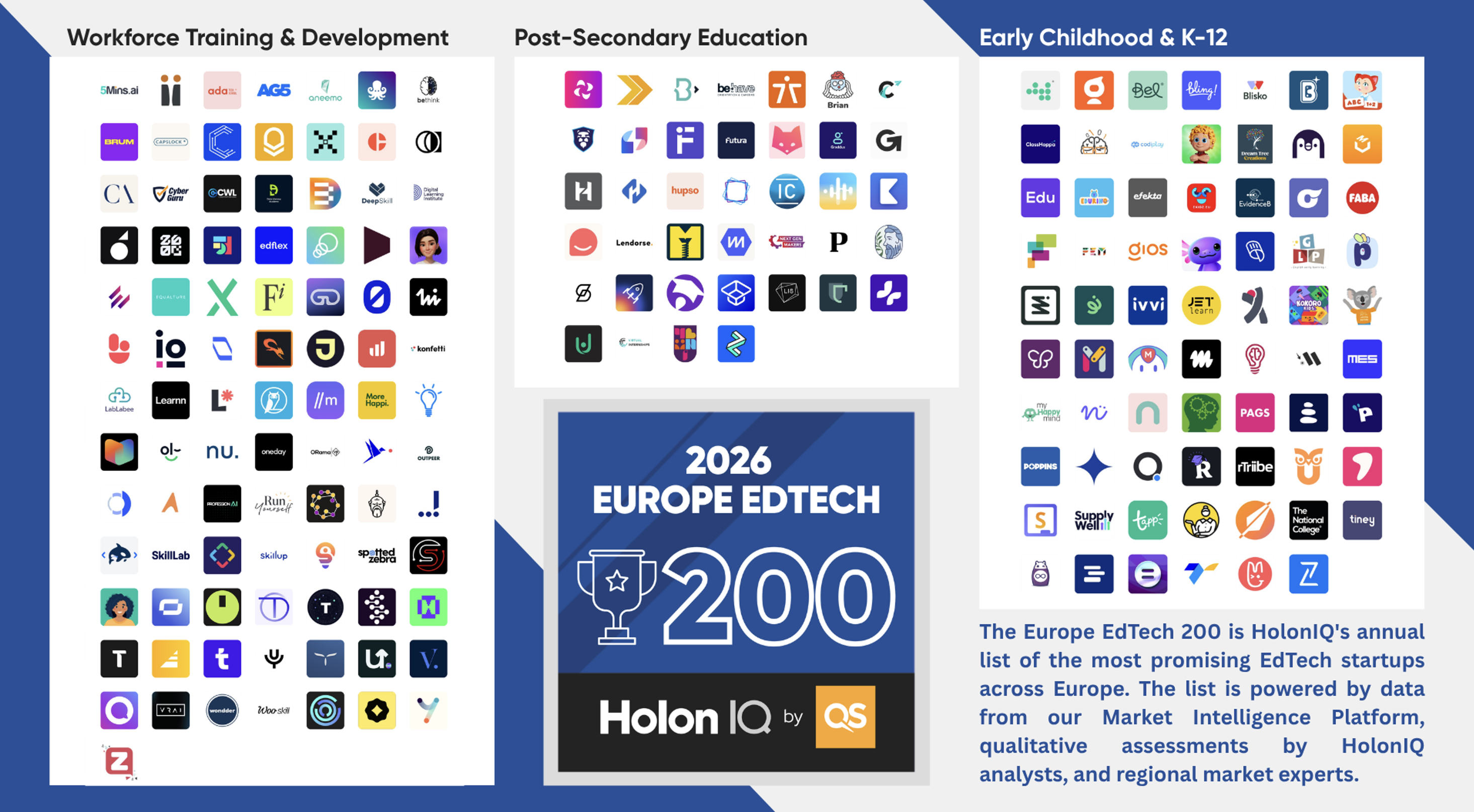
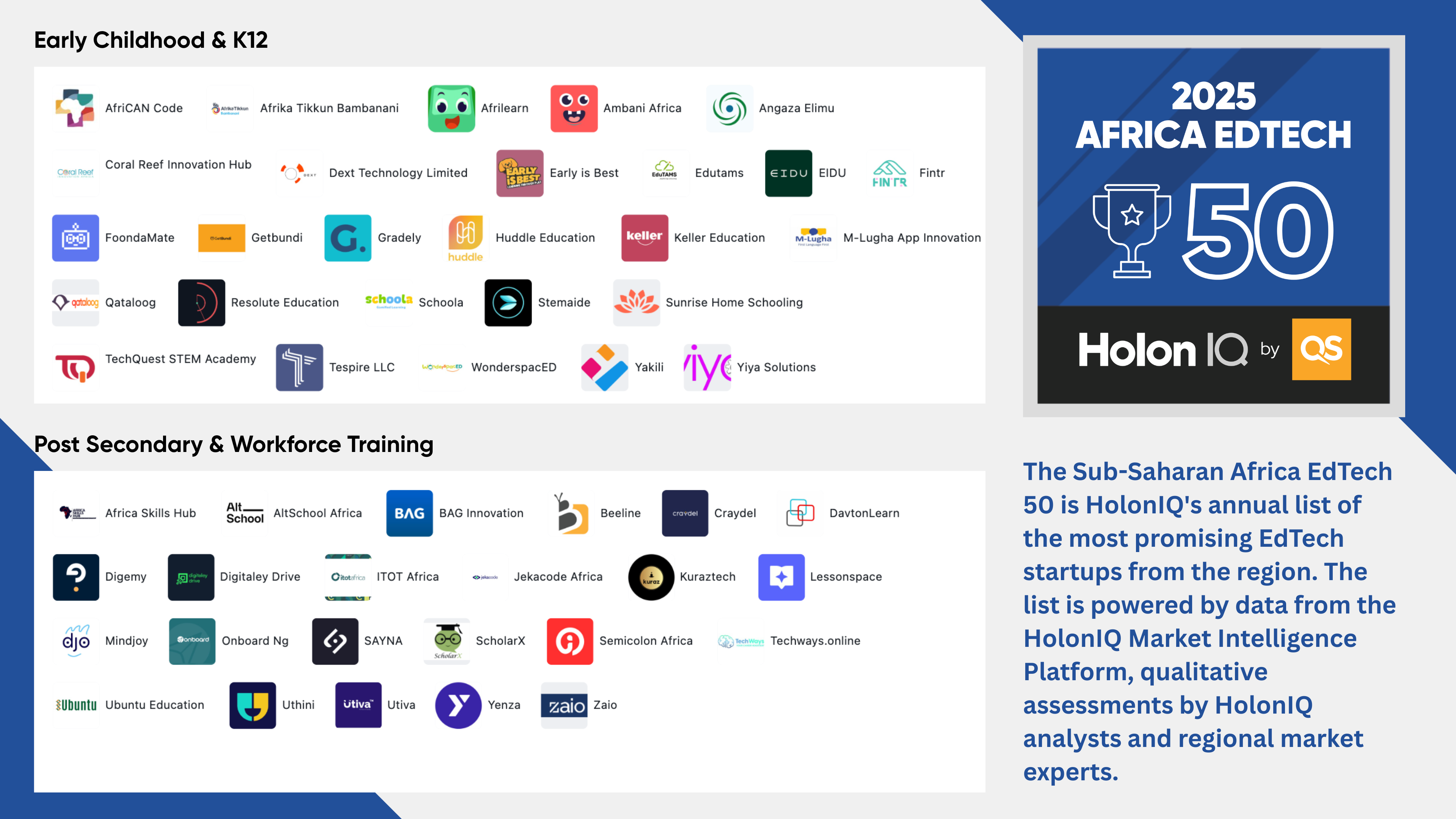
The Africa EdTech 50 is HolonIQ's annual list of the most promising EdTech startups from the region.
The Africa EdTech 50 is focused on identifying young, fast growing and innovative learning, teaching and up-skilling startups from the region. Powered by data and insights from our Impact Intelligence Platform together with qualitative assessments by HolonIQ’s Intelligence Unit, and local market experts, organizations are evaluated and scored based on our eligibility and assessment criteria, which excludes EdTech's founded over 10 years ago, or those which have exited (listed, acquired or controlled by another organisation).
The Africa EdTech 50 is aligned to the Global Learning Landscape, an Open-Source Taxonomy that maps the education and talent market
Sub-Saharan Africa’s education and skills landscape continues to evolve against the backdrop of one of the world’s fastest-growing youth populations. The region faces persistent pressure to expand access, strengthen foundational learning, and prepare millions of young people for a rapidly changing labor market. This year’s Sub-Saharan Africa EdTech 50 highlights teams building tools for learners, teachers, and institutions in environments where infrastructure, affordability, and workforce alignment remain central challenges. The 2025 cohort reflects a maturing ecosystem, where local relevance, mobile-first delivery, and skills-oriented pathways anchor innovation across the region.
Exhibit 2
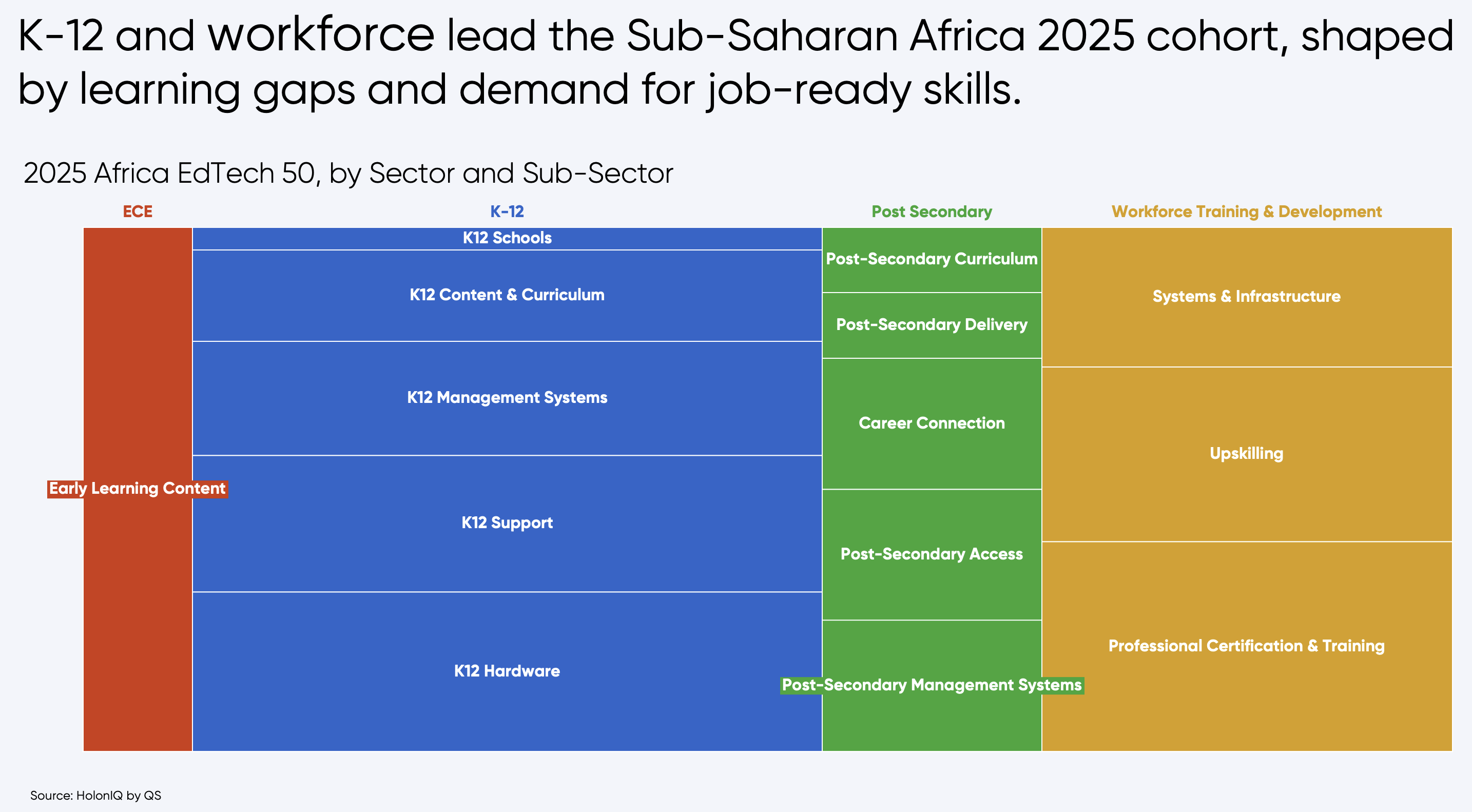
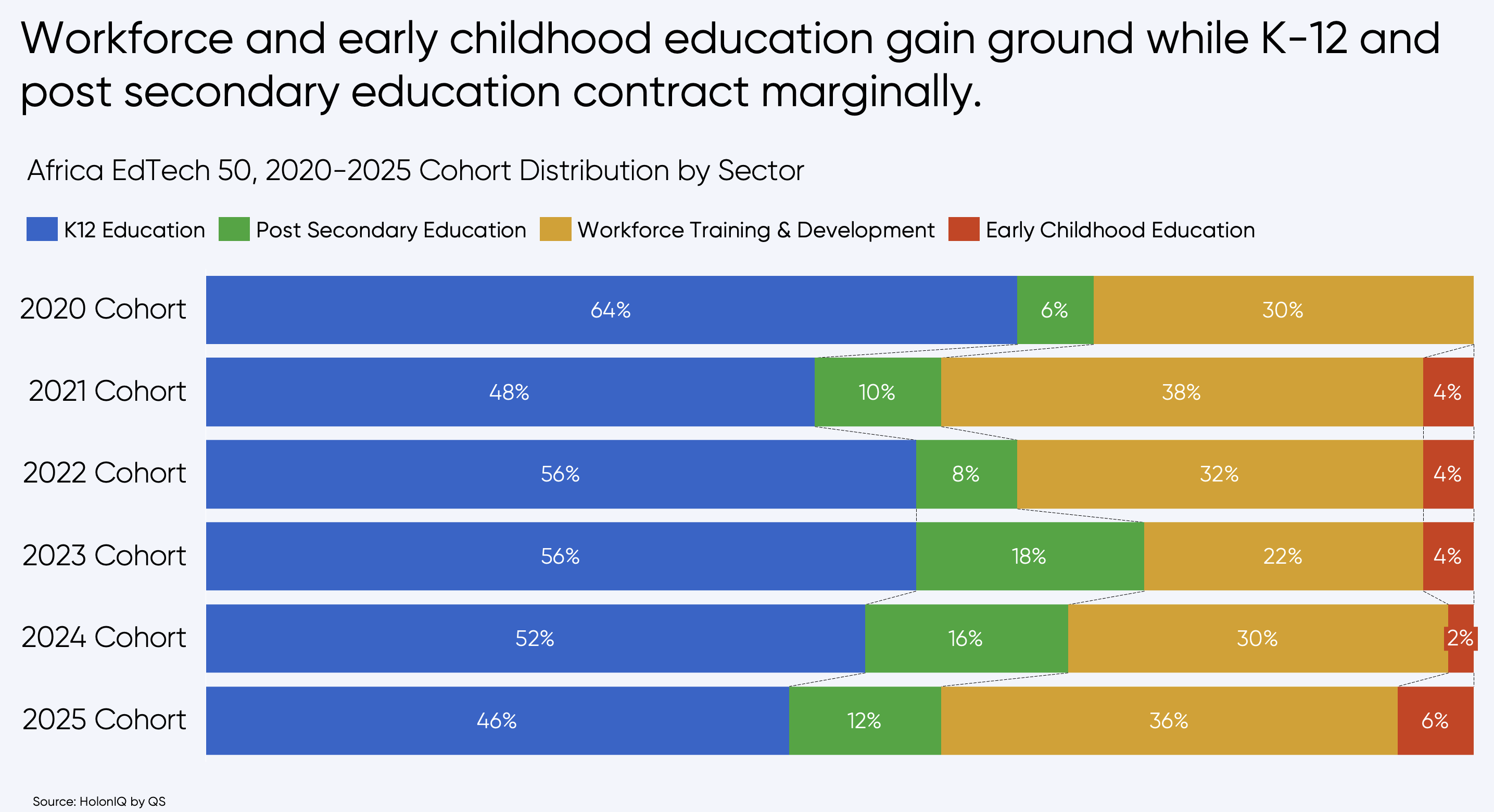
K-12 remains the region’s core EdTech focus, with early learning gaining ground as demographics shift.
K-12 accounts for just about half of the 2025 cohort, underscoring the continued importance of reaching school-age learners across a region where foundational education gaps remain acute. Content, tutoring, and STEM-focused tools feature strongly, from FoondaMate and Gradely to hands-on STEM offerings such as Resolute Education, TechQuest STEM Academy and Stemaide. These organizations reflect ongoing demand for accessible, curriculum-aligned materials that can operate across diverse connectivity environments.
Early learning providers represent 6%, supported by the region’s growing young child population and increasing attention to early literacy and cognitive development. Platforms such as WonderspacED and Early Is Best illustrate the expansion of child-focused learning content and development resources, particularly in lower-income communities where early intervention is critical.
Exhibit 3
Workforce and upskilling solutions continue to expand, shaped by a widening skills deficit.
Workforce solutions make up over a third of this year’s list, reaffirming the region’s urgent need to equip young adults with job-ready skills. Growing employer demand for digital capabilities and the persistent mismatch between education and labor market needs are visible in the spread of models across tech bootcamps, marketplace platforms, and short-cycle credentials.
Organizations such as Africa Skills Hub, Kuraztech, Utiva, and Semicolon Africa focus on practical, workforce-aligned technical training, while Beeline and DavtonLearn provide enterprise-level learning systems to support professional development. Together, these companies respond to structural pressures within the region’s labor markets, emphasizing employability, digital literacy, and flexible training formats.
Exhibit 4
Sub-sectors reflect demand for both learner-facing tools and institutional infrastructure.
This year’s cohort shows meaningful activity across support, content, and infrastructure solutions. Instructional support continues to stand out, with Huddle Education and Yakili demonstrating demand for solutions that improve learner experiences. Language-focused and literacy content providers such as M-Lugha App and Ambani Africa, highlight the importance of localized, culturally relevant materials.
At the same time, institutional digital infrastructure maintains a stable presence. Edutams, and Lessonspace support school operations and virtual instruction, reflecting slow but consistent progress toward stronger school-level technology adoption across multiple countries. These teams illustrate how infrastructure and content ecosystems are maturing in tandem.
Ready to get started?
Get a personalized walkthrough of HolonIQ's Global Intelligence Platform.
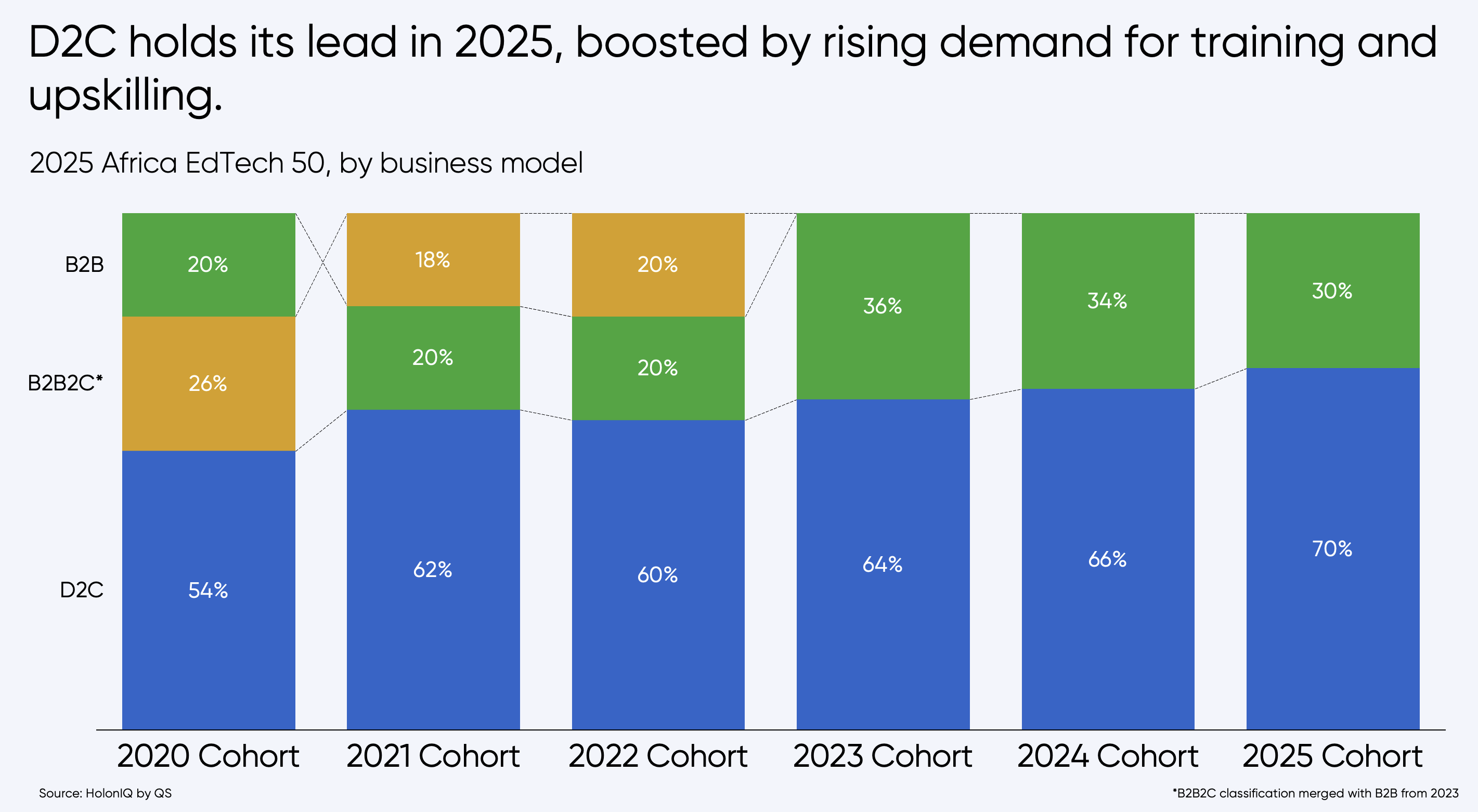
D2C remains the primary business model, while B2B strengthens as schools adopt more digital infrastructure.
Direct-to-consumer models represent 70% of the 2025 cohort, consistent with the region’s mobile-first learning preferences and the continued demand for learner- and parent-paid solutions. K-12 content, tutoring, and short-cycle skills training remain especially well suited to D2C delivery, with teams like SAYNA and Techways.online demonstrating strong consumer orientation.
B2B models account for a third of the cohort, reflecting growing institutional adoption and improved readiness among schools and enterprises. Organizations such as Digemy illustrate continued demand for digital content and training platforms, as both education and workforce sectors invest in modernization and expanding operational capacity.
Exhibit 5
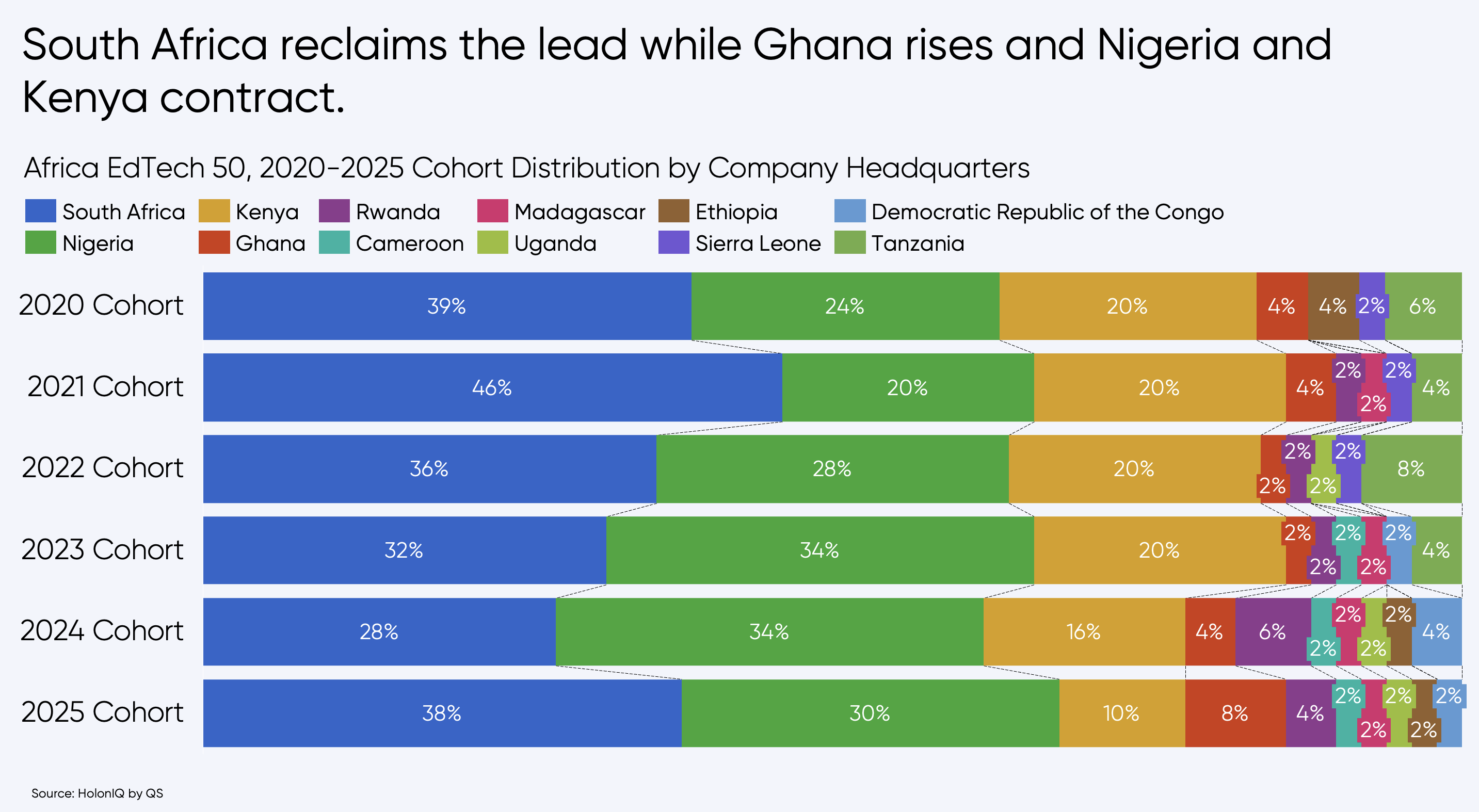
The 2025 cohort shows regional diversity with South Africa reclaiming its lead and Ghana expanding.
South Africa grew its share to nearly 40% of the 2025 list, reclaiming its role as the region’s largest and most active EdTech hub, supported by population scale, founder density, and a strong mobile consumer base. Nigeria holds about a third of the cohort, remaining a key contributor with a mix of K-12, early learning, and workforce solutions. Kenya continues to lose share, while other regions in Africa continue to show growth, particularly in Ghana, contributing 8% up from 4% in 2024, highlighting its emerging ecosystem and the rise of youth-skills and school-support models in the markets.
Exhibit 6
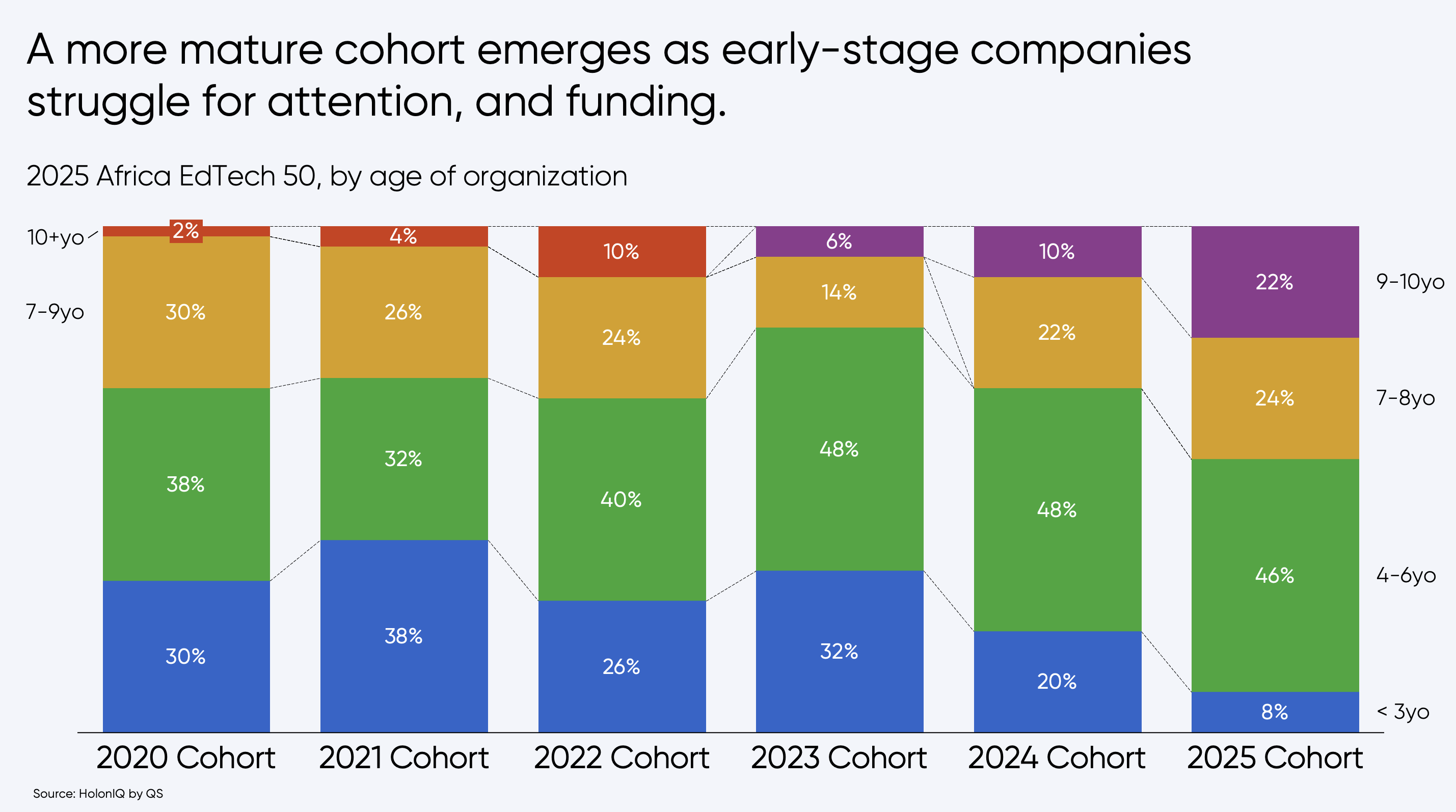
A more mature cohort reflects consolidation and slower early-stage formation
The 2025 Sub-Saharan Africa cohort reflects a more mature market, with fewer very young ventures and a growing base of established operators. Just under a half of companies are between four and six years old, representing the region’s most active growth band. Another quarter fall into the seven- to eight-year range, highlighting continued consolidation among mid-stage providers. A smaller share is nine to ten years old, indicating a stable group of long-standing players that have weathered market volatility. Only a small minority of the 2025 list are three years old or younger, underscoring a slowdown in new founding activity amid tighter funding conditions and rising operational demands.
Together, the age profile points to a sector that is shifting from rapid experimentation toward resilience, scale, and operational depth, with fewer new entrants but stronger institutional foundations across digital learning, school infrastructure, and workforce training.
Exhibit 7
Track the 2025 Cohort
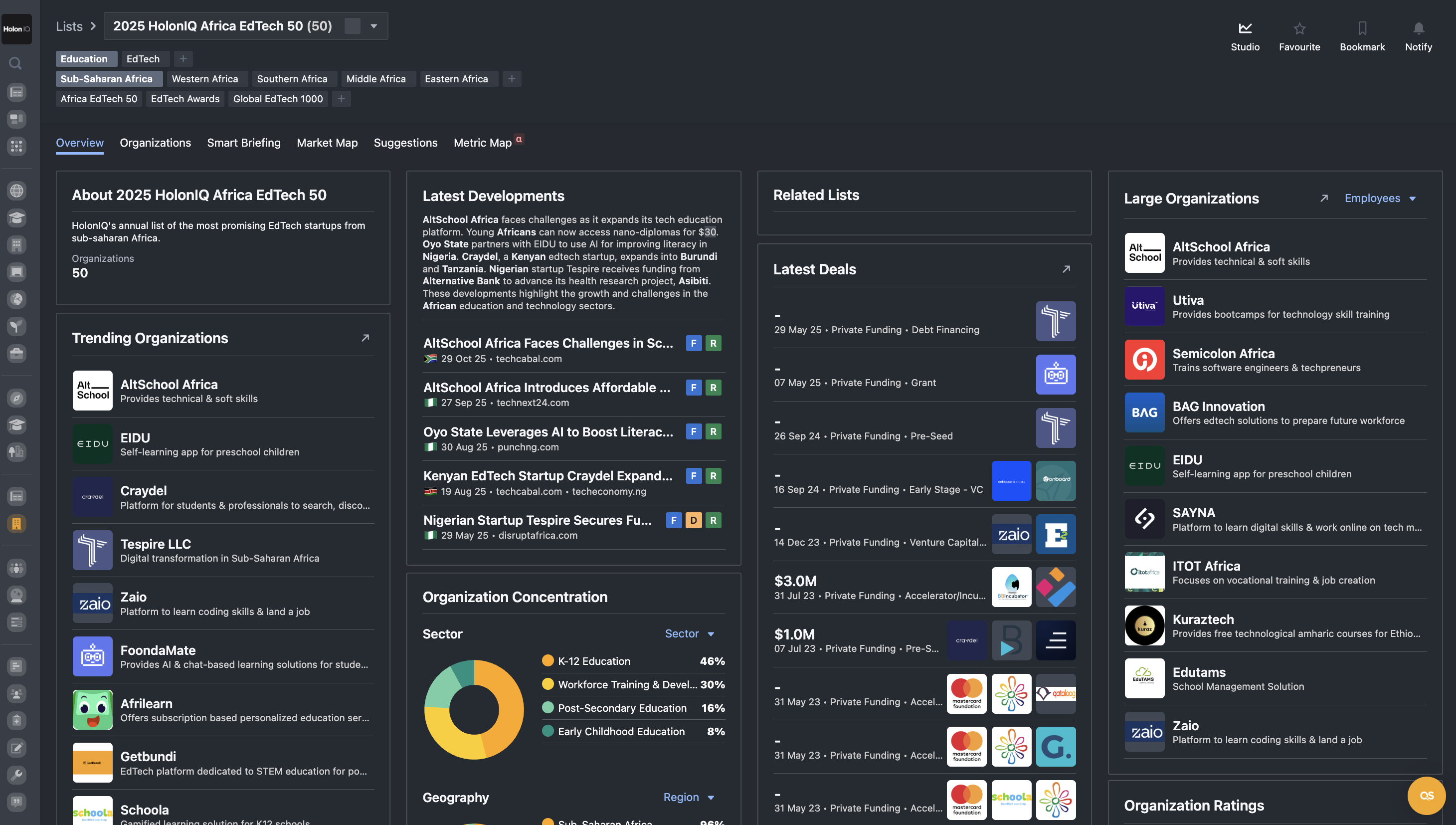
HolonIQ customers can track the data for the most promising EdTech startups in the region on the HolonIQ Intelligence Platform. Look for the 2025 Africa EdTech 50 list and double click into the data behind the charts. Request a Demo if you are not a customer and would like to learn more.
No items found.
Latest Insights
Global Insights from HolonIQ’s Intelligence Unit. Powered by our Global Impact Intelligence Platform.
We provide you with relevant and up-to-date insights on the global impact economy. Choose out of our newsletters and you will find trending topics in your inbox.






.png)