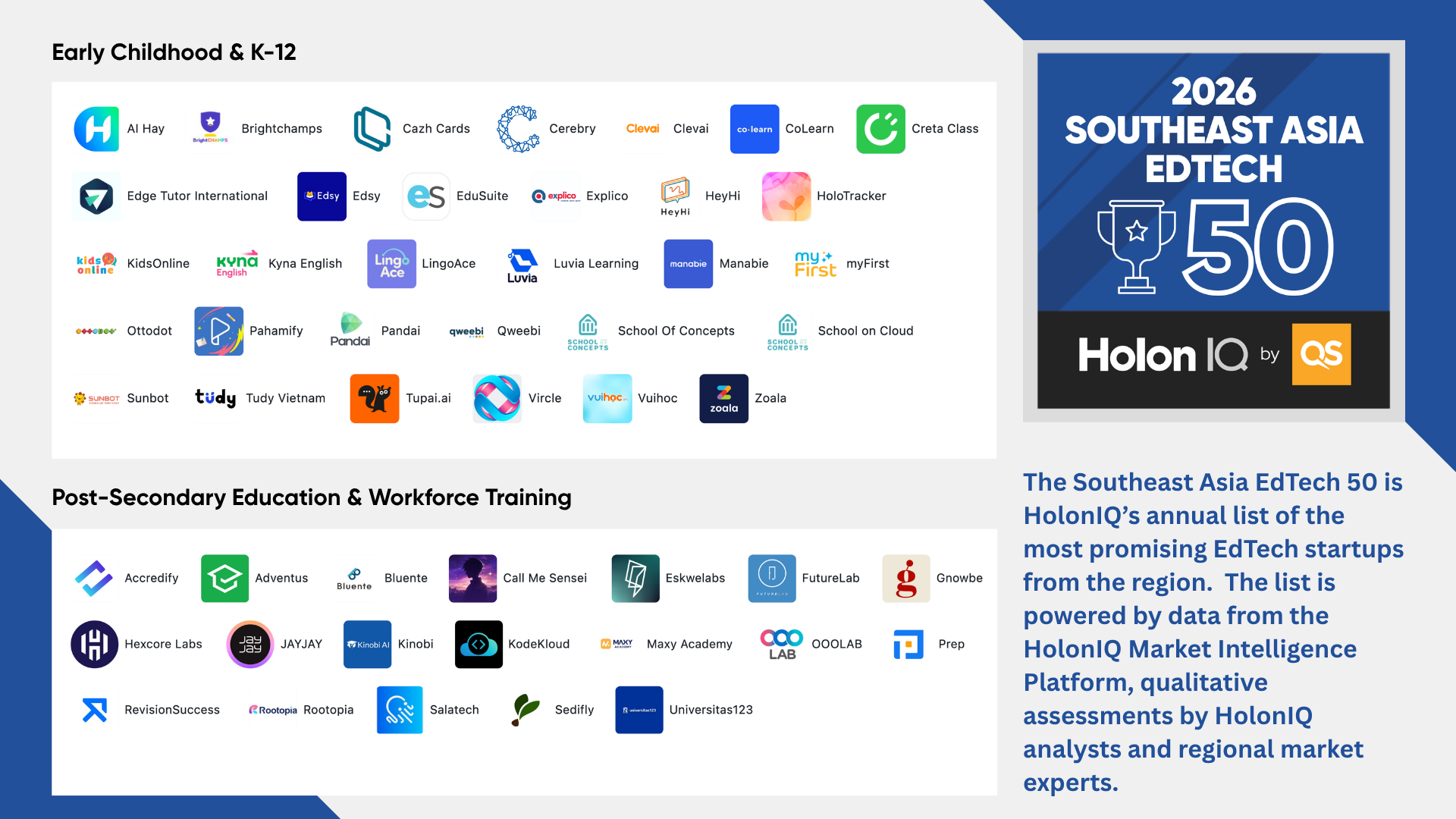
The Southeast Asia EdTech 50 is HolonIQ's annual list of the most promising EdTech startups from the region.
The Southeast Asia EdTech 50 is focused on identifying fast growing and innovative learning, teaching and up-skilling startups from across Southeast Asia. Powered by data and insights from the HolonIQ Impact Intelligence Platform together with qualitative assessments by HolonIQ’s Intelligence Unit, and local market experts in each region, organizations are evaluated and scored based on our eligibility and assessment criteria.
The Southeast Asia EdTech 50 is aligned to the Global Learning Landscape, an Open-Source Taxonomy that maps the education and talent market
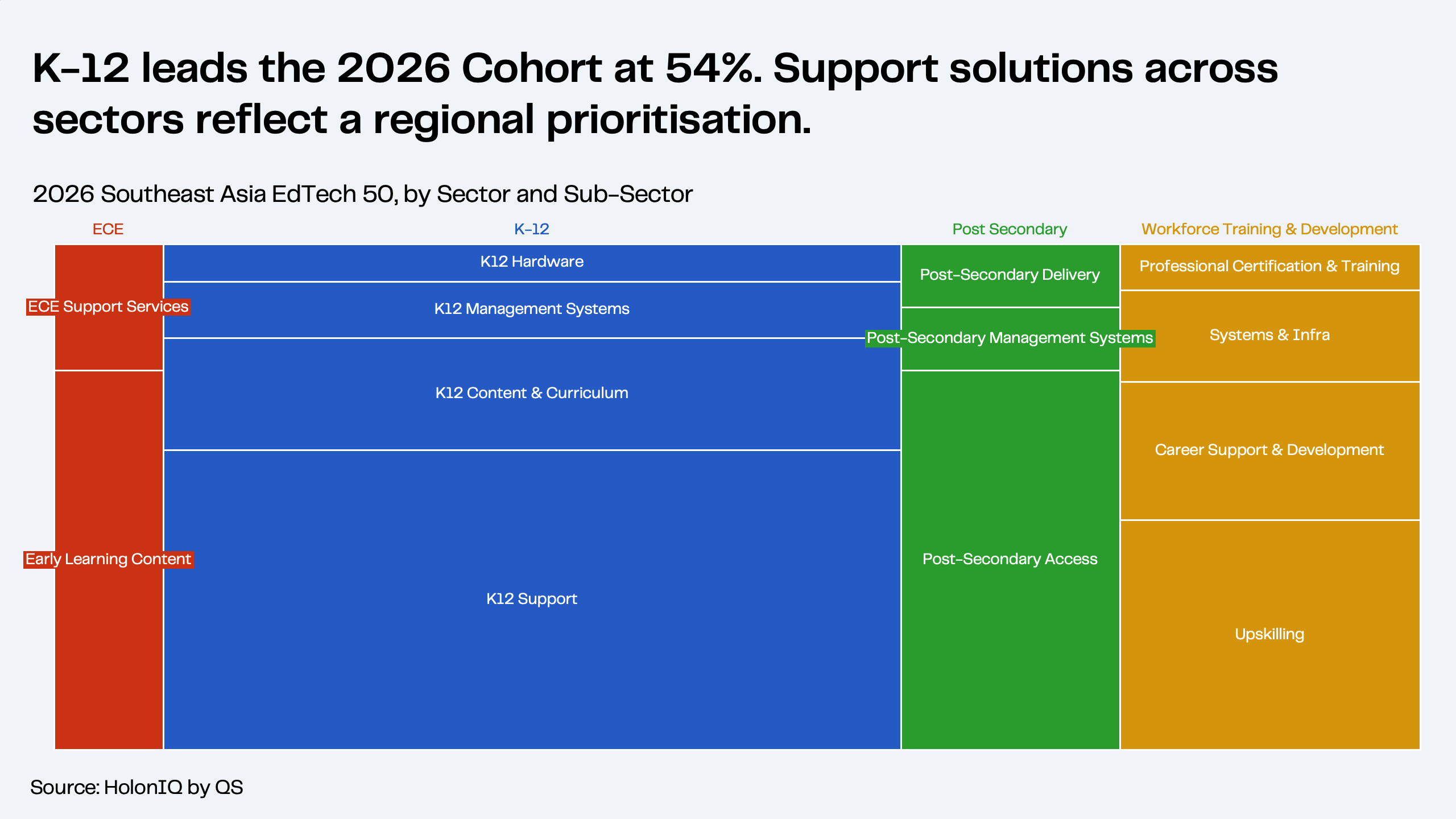
Exhibit 2. 2026 Southeast Asia EdTech 50, by Sector and Sub-Sector
K-12 remains Southeast Asia's largest sector, accounting for over half of the 2026 cohort, while Early Childhood reaches its highest representation to date at 8%.
More than half of the region's most promising companies now focus on school-age learners, and the same support-driven model shows up well beyond K-12. AI Hay and Cerebry anchor K-12 Support, the cohort's largest subsector, while FutureLab and KidsOnline extend that same pattern into Workforce Training and Early Childhood.
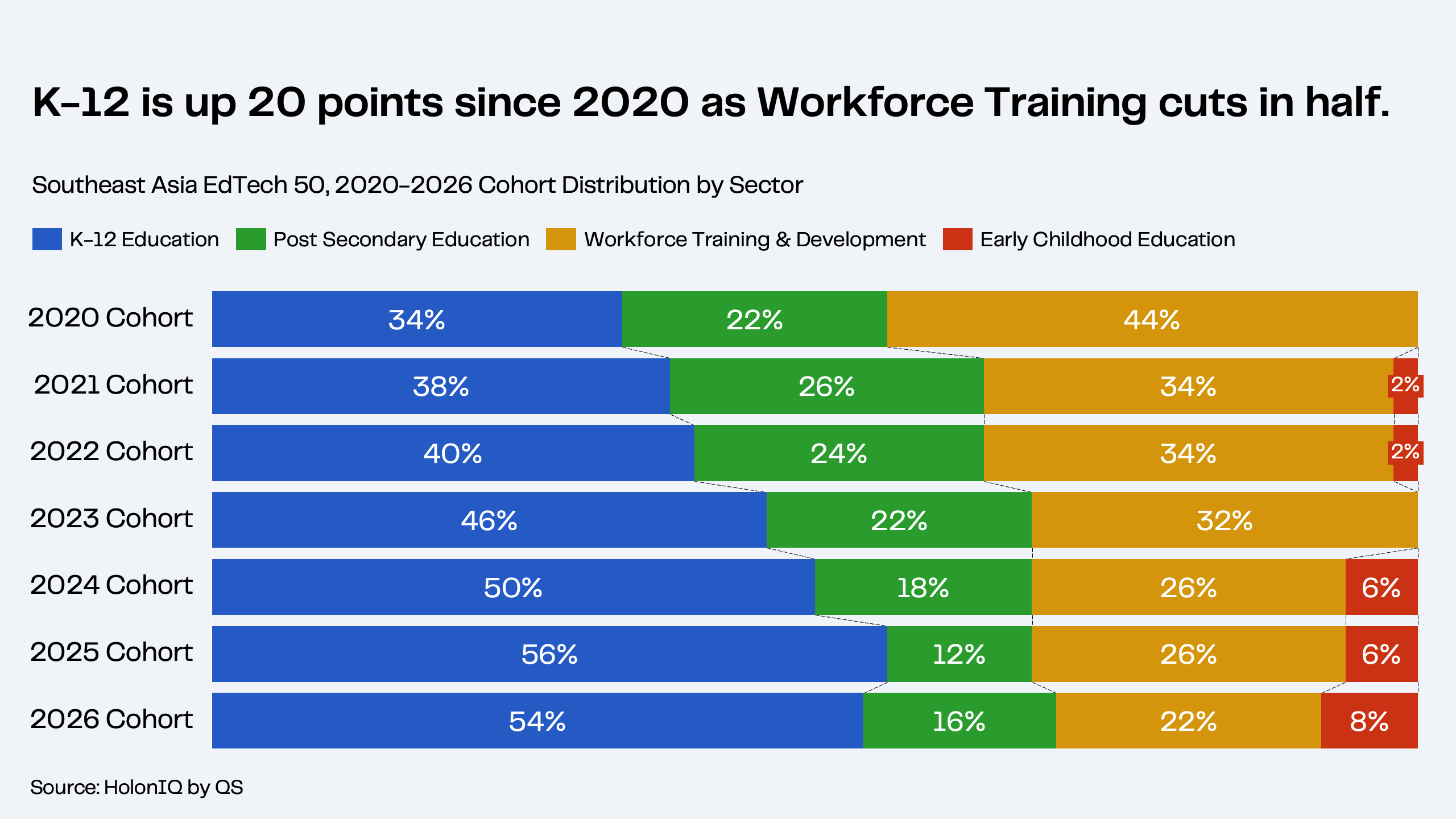
Exhibit 3. Southeast Asia EdTech 50, 2020-2026 Cohort Distribution by Sector
K-12's share has grown by 20 percentage points since 2020 and has held steady near the mid-50s for the past two years, while Workforce Training's share has halved.
The center of gravity in Southeast Asia EdTech has moved toward foundational learning over the past several years, though the pace of that shift eased in 2026 as K-12's share held within its recent range. The long decline in Post-Secondary appears to be slowing: its share ticked up in 2026 after a steep decline the year before, pointing to renewed activity in access, admissions, and employability solutions. Adventus and Universitas123 point to that stabilization, while Kinobi uses learner support with career training as a bridge between the two sectors.
Ready to get started?
Get a personalized walkthrough of HolonIQ's Global Intelligence Platform.
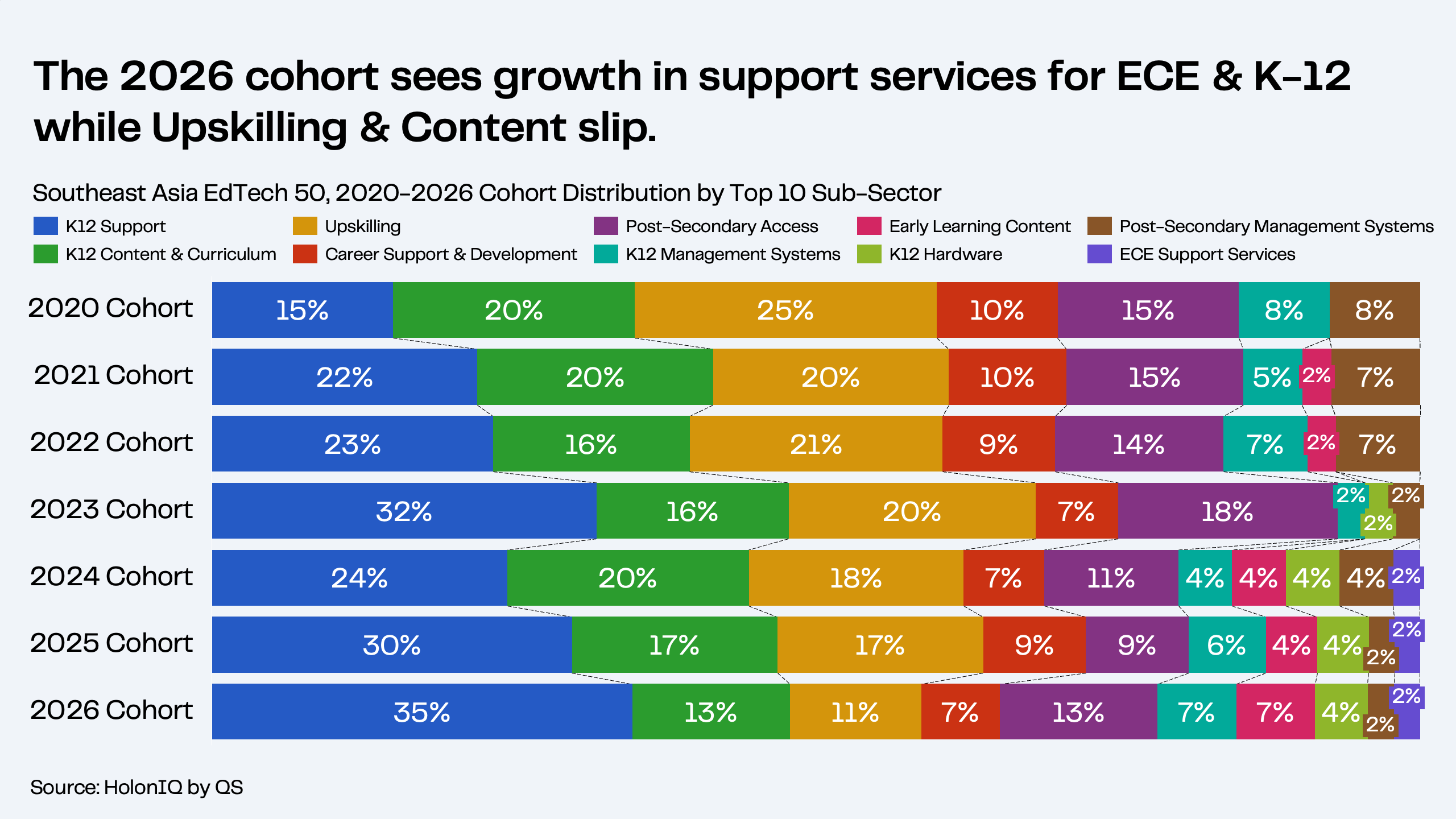
K-12 Support has emerged as the region's defining sub-sector, growing to 35% of the cohort, while Upskilling has fallen to 11%.
The strongest innovation continues to concentrate in K-12 learner support, including tutoring, assessment, and AI-enabled learning experiences. While across the globe, Upskilling remains a growing trend, its share in this region has narrowed over the past two years. K-12 solutions such as Vuihoc anchor K-12 Support's continued growth, while Bluente, Call Me Sensei, and Eskwelabs represent Upskilling's now-smaller, but innovative field of sector organizations.
Exhibit 4. Southeast Asia EdTech 50, 2020-2026 Cohort Distribution by top 10 Sub-Sectors
K-12 Support has emerged as the region's defining subsector, growing to 35% of the cohort, while Upskilling has fallen to 11%.
The strongest innovation continues to concentrate in K-12 learner support, including tutoring, assessment, and AI-enabled learning experiences. While across the globe, Upskilling remains a growing trend, its share in this region has narrowed over the past two years. K-12 solutions such as Vuihoc anchor K-12 Support's continued growth, while Bluente, Call Me Sensei, and Eskwelabs represent Upskilling's now-smaller, but innovative field of sector organizations.
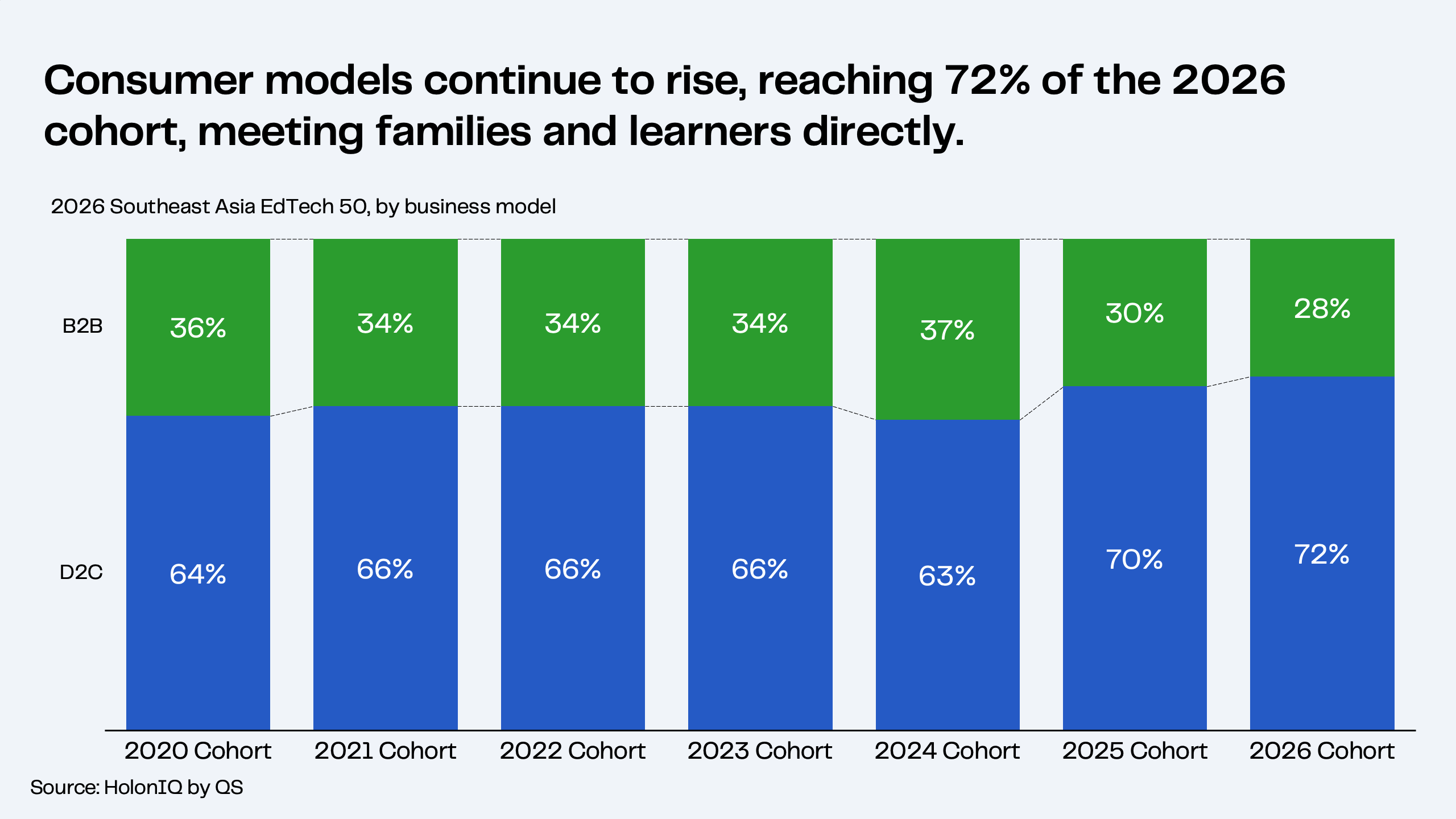
Exhibit 5. 2026 Southeast Asia EdTech 50, by business model
Consumer demand remains the region's primary driver, with D2C models outnumbering B2B models.
The strongest companies continue to build direct relationships with learners and families. Consumer models now account for 72% of the cohort, reinforcing Southeast Asia's position as one of the world's most active direct-to-learner EdTech markets. LingoAce and Pandai exemplify that consumer-first approach.
Exhibit 6. 2026 Southeast Asia EdTech 50, by age of organization
The bar for entry keeps rising as the list favors companies with a track record over new bets: startups under three years old fell to 6% of the cohort, from 26% in 2020.
Nearly 80% of this year's cohort falls in the 4-8 year range, the scale-up phase where companies build execution capability and expand across the region rather than the earliest stage of experimentation. Manabie, CoLearn, and Pahamify all reflect that scale-up profile.
Exhibit 7. Southeast Asia EdTech 50, 2020-2026 Cohort Distribution by Company Headquarters
Singapore strengthens its position as Southeast Asia's EdTech hub, now home to half of the cohort, while Vietnam holds the region's second-largest share.
Singapore's ecosystem continues to attract talent, capital, and regional expansion strategies, making it the primary market for Southeast Asia's startup EdTech companies. Vietnam has held the region's second-largest share since 2024, while Indonesia's share has declined from 38% in 2020 to 12% in 2026. Incumbents such as LingoAce, Brightchamps, and Adventus are all headquartered in Singapore.
Track the 2026 Cohort
Customers can track the data for the most promising EdTech startups in the region on the QS Analytics Platform. Look for the 2026 Southeast Asia EdTech 50 list and double click into the data behind the charts. Request a Demo if you would like to learn more.
Deep Dive the List
Customers can deep dive the open-source list on the platform. Request a demo to learn more.
We provide you with relevant and up-to-date insights on the global impact economy. Choose out of our newsletters and you will find trending topics in your inbox.



.png)
.png)
.png)


.png)


.png)